

 Filipino


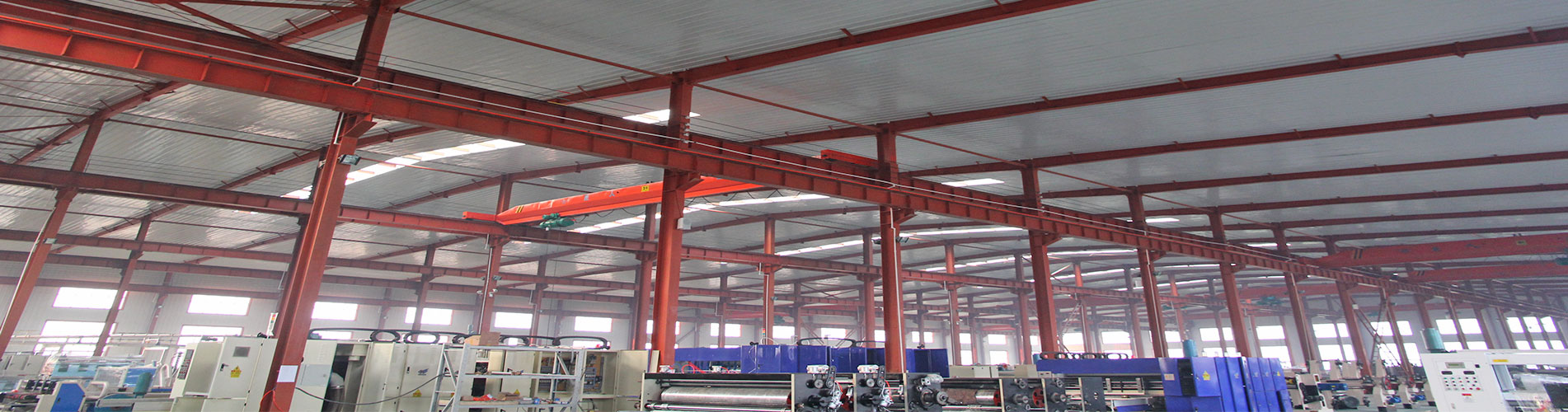

Advantages of Steel Structure Warehouses in Logistics
Steel structure warehouses have become the default choice for modern logistics parks, fulfillment centers, and cross-dock facilities — and for good reason. Below are the core advantages, from construction to lifecycle economics.
1. Speed of Construction
Prefabricated members are fabricated off-site while foundations are poured, so the two run in parallel.
A 10,000 m² logistics warehouse can often be weather-tight in 8–12 weeks, versus 6–10 months for reinforced concrete.
Faster handover means earlier rental income and quicker ROI — critical when lease-up timing drives project feasibility.
2. Large Column-Free Spans
Steel portal frames and trusses routinely clear 30–40 m spans; long-span trusses or space frames can push 60–80 m.
Fewer (or zero) interior columns unlock:
Higher-density racking layouts
Uninterrupted AGV / forklift traffic flows
Flexible re-slotting as SKU profiles change
This is the single biggest operational win for high-bay automated warehouses.
3. Higher Clear Heights & Vertical Cubage
Steel frames make 12–16 m clear heights economical, with 18 m+ achievable for fully automated AS/RS.
More vertical storage per square meter of land = lower land cost per pallet position, which matters most near expensive urban nodes.
4. Lightweight = Cheaper Foundations
Steel structures weigh roughly 30–50% less than equivalent concrete frames.
On poor soil (common in reclaimed logistics land near ports and river deltas), this translates directly into smaller piles, shallower footings, and meaningful foundation savings.
5. adaptability & Future-Proofing
Easy to extend lengthwise, add bays, or insert mezzanines.
Mezzanine floors can be added later for pick modules, offices, or light assembly without demolishing the original structure.
Members can be unbolted, relocated, and re-erected — useful for lease terms under 10 years or for relocating a fulfillment network.
6. Seismic Performance
Steel's ductility lets it absorb and dissipate earthquake energy through controlled deformation rather than brittle cracking.
In seismic zones (e.g., western China, Japan, California), steel is often the code-preferred material for tall, lightly-clad single-story buildings.
7. Precision & Compatibility with Automation
Fabrication tolerances are measured in millimeters, which matters when you're bolting on:
AS/RS crane rails
Conveyor mezzanines
Solar panel arrays on the roof
Robot-ready flat floors (steel frames + post-tensioned slabs are a proven pairing)
Minimal field welding = less on-site variability.
8. Sustainability & Circular Economy
Structural steel is ~90–98% recyclable at end of life with no downgrade in material properties.
High recycled content (EAF steel) plus lightweight design lowers embodied carbon per m².
Pairs naturally with:
Roof-mounted PV (large, unshaded, south-facing planes)
Rainwater harvesting on big roof areas
Cool-roof / insulated sandwich panels for lower HVAC load
For logistics, steel wins on the metrics that actually move the P&L: time-to-lease, storage density per land unit, adaptability to automation, and residual value at exit. That's why the vast majority of Grade-A logistics warehouses delivered in Asia, Europe, and North America over the past decade are steel portal-frame or steel long-span structures.
Mga kategorya
pinakabagong blog
Mga tag


Para sa Mga katanungan tungkol sa aming mga produkto o pricelist, mangyaring mag-iwan sa amin at kami ay nakikipag-ugnay sa loob ng 24 oras.
© Copyright: 2026 Hebei Baofeng Steel Structure CO.,LTD Lahat ng Karapatan ay Nakalaan.

IPv6 suportado ng network


 +8615720226351
