

 Filipino


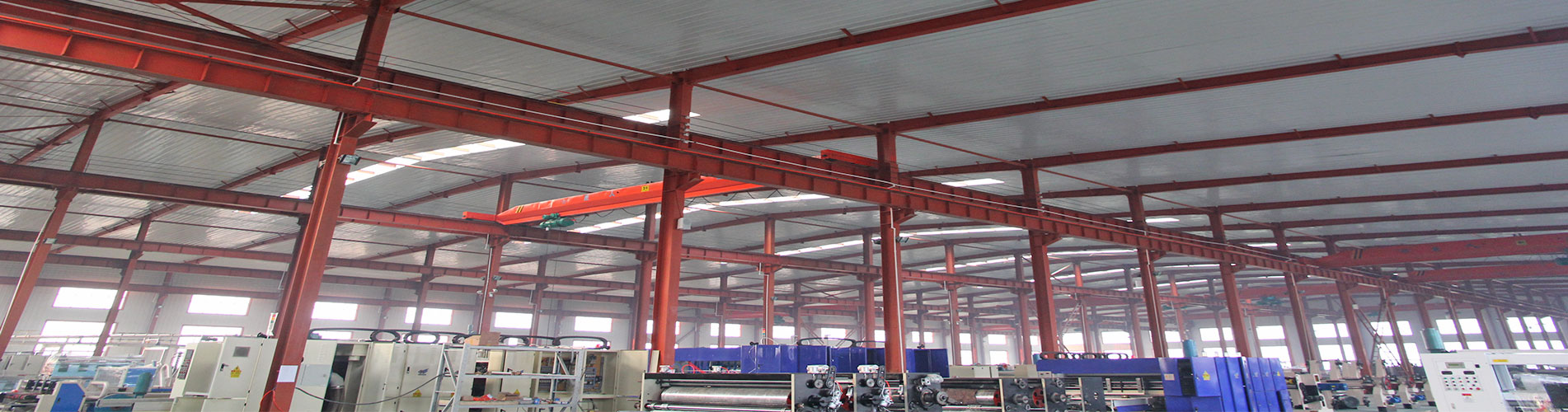

What is The Enclosure System for the Steel Structure Workshop?
The Enclosure System of a steel structure workshop refers to the complete set of non-structural components that "clad" or enclose the main structural frame. Its primary purposes are to provide weather protection, thermal insulation, aesthetic appearance, and to resist environmental loads like wind and snow on the cladding itself.
Think of it as the skin and insulation wrapped around the steel skeleton.
Core Components of the Enclosure System
A typical system consists of the following layers and elements, working from the outside in:
1. Roof System:
Roof Cladding: Usually profiled metal sheets (e.g., Galvalume, Galvanized, or Aluminum-Zinc coated steel). Common profiles include trapezoidal or standing seam roofs for better waterproofing.
Roof Insulation: Sandwiched between the outer sheet and inner liner. Common types are:
Composite Panels (Sandwich Panels): Factory-made panels with a rigid insulation core (PUR/PIR, Rockwool, EPS) bonded between two metal skins. Highly popular for speed and performance.
Bulk Insulation: Rolls or bats of fiberglass, rockwool, or foam laid over the purlins, held in place by the inner liner.
Inner Liner: An interior metal sheet (often lighter gauge) that provides a clean, finished interior surface.
Accessories: Roof vents, skylights, ridge caps, gutters, and downpipes.
2. Wall System:
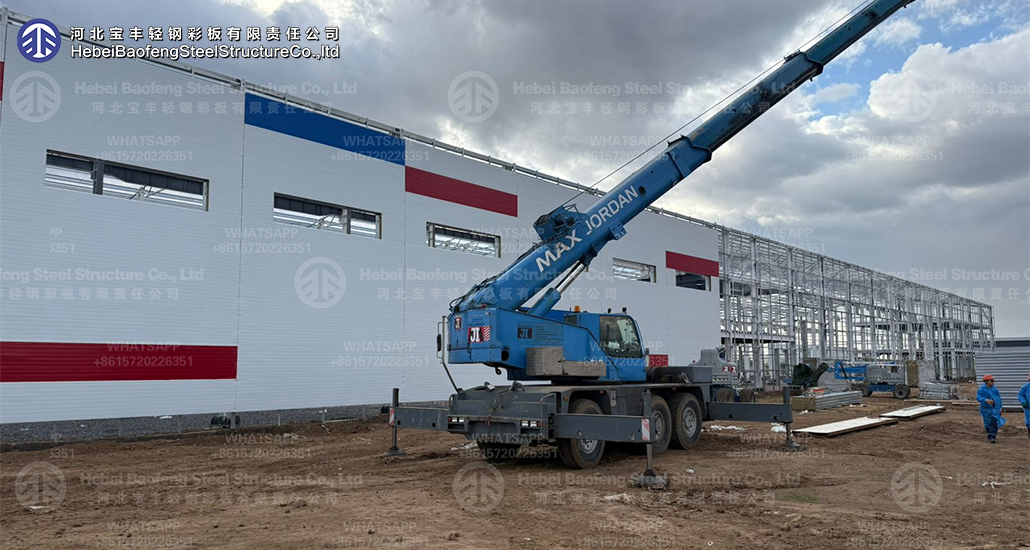
Wall Cladding: Similar to the roof—profiled metal sheets, sandwich panels, or sometimes masonry (brick, block) or precast concrete for specific architectural needs.
Wall Insulation: Same principles as the roof, using sandwich panels or layered insulation.
Inner Liner (optional): Used for a finished interior look and to protect insulation.
Accessories: Windows, louvers, personnel doors, roller shutter doors for loading bays, and flashing details around openings.
3. Structural Sub-Frame:
This includes purlins (for the roof) and girts (for the walls). These are cold-formed, lightweight Z or C-shaped steel members that span between the main primary frames (columns, rafters). They provide direct support for the cladding and transfer the cladding loads back to the main structure.
Key Functions and Considerations
Weathertightness: The most critical job. Prevents water, snow, and dust ingress through joints, overlaps, and proper flashing.
Thermal Performance (Insulation): Governed by the U-value. Essential for worker comfort, process control, and energy efficiency. The choice of insulation material and thickness is crucial.
Fire Resistance: The cladding materials, especially the insulation core, must meet local building code requirements for fire spread and smoke generation. Non-combustible materials like rockwool are often specified for high-risk areas.
Durability & Maintenance: The choice of coatings (e.g., PVDF, HDP) on metal sheets affects corrosion resistance, color retention, and longevity.
Aesthetics: Color, profile, and finish choices define the building's external appearance. Can include decorative elements or different materials (e.g., insulated metal panels on walls, standing seam roof).
Natural Lighting: Integrated elements like polycarbonate panels, skylights, or light-transmitting sandwich panels.
Ventilation: Integrated louvers, ridge vents, or prepared openings for fan units.
Common Types of Enclosure Systems
1.Insulated Sandwich Panel System: The most modern and efficient. Single-element panels provide structure, insulation, and interior/exterior finish in one. Fast to erect, excellent thermal performance.
2.Built-Up / Composite System: A traditional layered approach:
Outer Metal Sheet
Vapor Barrier
Insulation (blanket or rigid board)
Inner Liner Sheet
More flexible for complex details but slower to install on site.
3.Masonry Infill System: Uses brick or concrete block walls between steel columns. Heavier and slower but offers high durability, fire resistance, and a traditional aesthetic.
Design and Integration
A successful enclosure system is not an afterthought. It is integrally designed with the main structure:
The spacing of purlins and girts is determined by the cladding's span capability.
The main frame must account for loads transferred from the enclosure.
Thermal expansion/contraction of the cladding must be accommodated in the detailing.
Movement joints are critical where different materials meet.
In summary, the Enclosure System is the critical, multifunctional "building envelope" of a steel workshop. It transforms the bare structural frame into a functional, protected, and efficient working environment. Its selection directly impacts the building's lifecycle cost, energy consumption, durability, and functionality.
Mga kategorya
pinakabagong blog
Mga tag


Para sa Mga katanungan tungkol sa aming mga produkto o pricelist, mangyaring mag-iwan sa amin at kami ay nakikipag-ugnay sa loob ng 24 oras.
© Copyright: 2026 Hebei Baofeng Steel Structure CO.,LTD Lahat ng Karapatan ay Nakalaan.

IPv6 suportado ng network


 +8615720226351